|
Ethics, Values & Social ResponsibilityBusiness Training Media offers a wide selection of business ethics training and educational programs. We also offer Online Business Ethics Training Programs for employee training and development.
![]() This course is also available for online training, see details below. Ethics 4 Everyone beautifully illustrates the cause-and-effect of corporate and individual responsibility, offering do-able solutions, including how to make decisions that ensure a greater ethical response to business issues. Discover what some of the world's most respected public and private sector concerns have learned about long-term organizational viability. Ethics 4 Everyone teaches viewers:
Program Contents: A 15 minute DVD or video, Leader's guide, PowerPoint Presentation on CD-ROM, 10 Participant Workbooks, 10 Copies of the book "Ethics 4 Everyone" and 10 Reminder Cards Online Training Option: This program is also available for online training - click here for details
![]()
Produced - 2007 Teach your employees what it really means to consistently act with integrity -- the kind of integrity that leads to organizational excellence. Your trainers can promote ethical conduct in many areas including: billing and coding, quality of care, internal reporting, giving and receiving gifts, documenting retention, destruction of records, customer service, culture and community. This program features the A.C.T. decision-making model:
Learning Point Highlights:
Program Includes: A 17 minute DVD or VHS, CD-ROM with Facilitator's Guide, Facilitator Resources and Online Program Resources
![]()
Life doesn't come with a pause button. Ethical dilemmas demand instant clarity. The Moment of Truth program addresses this problem head-on by giving employees a practical guide for making better decisions. By focusing in on six different ethical dilemmas, the video demonstrates that no matter where the pressure is coming from - a superior, a coworker, a friend, or even a family member - anyone can make good decisions by using these four questions to find clarity in their moment of truth:
Program includes:
![]()
Promoting a Culture of Ethical Conduct and Compliance How do you turn a Code of Conduct into a living, breathing part of your organization? Enlist the active, committed involvement of every leader! This program helps managers and supervisors step up to the daily task of promoting ethical conduct and ensuring compliance. Using the L.E.A.D. model, your organization's leaders will develop the skills to foster, influence and sustain a culture of integrity. Learning Point Highlights:
Complete Training Kit Components: DVD, VHS (22 minutes, Facilitator Guide, Reproducible Participant Materials, Reproducible Self-Study Guide, Online Program Resources and Trainer Pack
![]() This series outlines the principles that should underlie all sales and marketing transactions. Each program contains solid advice and concrete lessons that teach effective skills. 8-part series, 19-26 minutes each. The Series Includes: Selling to Yourself | In Search of Quality | Tailor the Sale | The Power of Honesty | Find Your Niche | Keep It Simple | Selling Beyond the Wallet | A Winning Follow-Through
![]() Produced - 2005 Beginning as a theoretical calculation, WorldCom’s projection for business growth soon became corporate strategy and eventually a model for the entire telecommunications industry. Unfortunately, it was completely unfounded. This CNBC news documentary exposed the extent of the WorldCom fraud and the smoke-and-mirrors behavior that prevailed not only at WorldCom but throughout the industry as a whole. Viewers will gain insight into the actions, decisions, and deception of several key participants, including the then-chairmen of AT&T and Sprint as well as Tom Stluka, the WorldCom capacity planner who constructed the growth model. (60 minutes)
![]() Released - 2004 When oil conglomerate Shell stunned investors by announcing a 20 percent reduction in its proven reserves, pensions and portfolios suffered around the world. This program reveals a pattern of exaggeration and cover-up at the company’s top level—specifically involving the former chairman and head of production. An unflinching analysis of a failure in business ethics, Shell Shock raises complex and timely questions: At what point did protection of the company’s image usurp shareholder interests? How did financial industry safeguards let such a crisis develop? And how can similar fiascoes be prevented in the future? Original BBCW broadcast title: Shell Shock. (39 minutes)
![]() This movie-like version of the powerpoint presentation with audio makes it easy to deliver workplace ethics training. HR experts and labor and employment attorneys agree that businesses— regardless of their industry or size—should be concerned about the ethical conduct of their supervisors and employees. According to a survey by the Ethics Officers Association and American Society of Chartered Life Underwriters, half of U.S. workers have committed one or more illegal or unethical acts. These acts included stealing office supplies, abusing sick days, massaging quality control figures, and using or abusing drugs and alcohol while on company time. When the training is complete, supervisors will be able to:
This time-saving program includes everything you need:
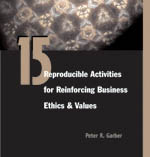
![]() In today’s business climate, simply having an ethics policy in place isn’t enough. You must continually keep ethics up front and center to avoid the ethical violations—and erosion of confidence—seen in corporate America today. This book contains 15 easy-to-use activities that can be used individually or as a whole to reinforce your company’s ethics and values. And inspire employees to recommit to responsible business behavior.
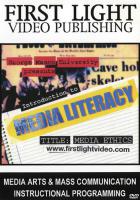
![]() Produced - 1997 Is a political candidate’s past personal life fodder for the front page? If a child commits murder, should the offender’s name be released? If a CD by a top recording artist has strongly antisocial lyrics, should the record label consider its impact on kids? In this program, news professionals and executives from NBC, CBS, Capitol-EMI Records, and Mercury Records speak out about the ethical dilemmas their industries face. The program also examines the case of Janet Cooke, who wrote a Pulitzer Prize-winning story about an 8-year-old heroin addict in 1981. The message was heartfelt, but fact-checking later proved her story to be closer to fiction than fact. In addition, the need for honesty and fairness, the subtle pressure of commercial interests, and the lure of sensationalism are discussed in this frank investigation of the pressures and circumstances that make up the context of media ethics. (28 minutes)
![]() Released - 2004 Corporate social responsibility is not a high-minded luxury when bad press puts a chokehold on business growth and profits. This program looks at how product and service providers develop and implement better business practices to satisfy shareholders, customers, employees, and the community. Companies such as Shell, DHL, Nike, and GlaxoSmithKline—placed on the hot seat by Greenpeace, the World Wildlife Fund, Oxfam, and other watchdog groups—explain how they dealt with environmental impact management, ethical supply chain management, equitable treatment of employees, proactive addressing of consumer disgruntlement, and accurate assessment of shareholder sentiment. (51 minutes)
Best-Seller / Released - 2006 The NewsHour with Jim Lehrer is renowned for its balanced, in-depth reporting. This anthology of NewsHour segments comes to terms with thorny issues of business ethics. Through interviews with key figures and insightful analysis, the anthology blends case studies and background reports to explore the Enron affair, stratospheric executive compensation, Wall Street irregularities, and other topical business concerns within their broader contexts.
The episodes are… • CEOs’ View of Corporate Ethics: Paul Solman elicits perspectives from CEOs Pete Peterson, Bill George, and Dick Syron on corporate and accounting scandals • Executive Perks: Ray Suarez talks with Harvard Business School’s Rakesh Khurana, author of Searching for a Corporate Savior, and Robin Ferracone, a partner with Mercer Human Resources Consulting, about the pay and perks of Jack Welch and other CEOs • Ethics of Stock Options: Margaret Warner analyzes the effects of stock options as compensation for managers and executives with TechNet’s Rick White and law professor Jennifer Arlen • Executive Pay—The Issues: Paul Solman inquires into the factors that influence executive pay • Executive Pay—Market Forces: Paul Solman examines whether the marketplace truly has a say in determining executive salaries • Wealth and Democracy: Paul Solman analyzes the impact of wealth on democracy with author Kevin Phillips and free market champion Lawrence Kudlow • Tricks of the Accounting Trade: Paul Solman examines short-term accounting gimmicks that businesses sometimes use to inflate earnings reports • Accounting Alchemy at Enron: Paul Solman takes a look at the sleight-of-hand accounting that contributed to the rise and fall of Enron • Wall Street Fraud: Terence Smith discusses the implications of a $1-billion settlement by major Wall Street firms with Jim Cox, professor of corporate and securities law, and Charles Elson, director of the John L. Weinberg Center for Corporate Governance • Mutual Fund Fraud: Margaret Warner investigates unfair mutual fund management practices such as late trading and market timing with Donald Langevoort, a former special counsel at the SEC, and John Bogle, founder of the Vanguard Group • Legislating Ethics: Terence Smith considers Sarbanes-Oxley corporate reforms with law professor Jim Cox; Nell Minow, editor of the watchdog Web site The Corporate Library; and The Brookings Institution’s Bob Litan • Wall Street Ethics, Part I: Gwen Ifill reviews the settlement of the lawsuit alleging that Merrill Lynch misled investors with John McConnell, of the Krannert School of Management; Paul Kedrosky, a former equity analyst at HSBC; and New York Times financial writer Gretchen Morgenson • Wall Street Ethics, Part II: Margaret Warner examines the ways Wall Street investment firms can influence the stock market with Columbia Law School’s John Coffee; Peter Siris, managing director of Guerilla Capital Management; and Stuart Kaswell, general counsel for the Securities Industry Association. (3 hours)
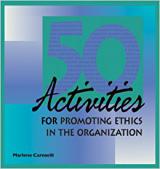
![]() This title is divided into five sections. Each section has ten exercises designed to stimulate discussion and promote inquiry regarding business ethics. The activities focus on Leadership, Corporate Citizenship, Salesmanship, Management, and Teamwork. Contributing to this collection is a range of trainers from a wide variety of disciplines and locations, including Europe, India, Canada, and a broad cross-section of the United States. Training Objectives

Training Methods
Time Guidelines: 50 activities vary in length from 15 minutes to 60 minutes.
![]() Produced - 2004 Moral philosophy lies at the heart of today’s most heated issues—abortion, human cloning, assisted suicide, financial conflicts of interest, and environmental stewardship. In this program, Harvard University’s Frances Kamm; Rutgers University’s Larry Temkin; and Richard Sorabji, honorary fellow at Wolfson College, the University of Oxford, describe the three major categories of ethics: metaethics; applied ethics; and normative ethics, including virtue theory, divine command theory, utilitarian theory, and duty theory. Plato’s Republic, Aristotle’s Nicomachean Ethics, Kant’s Grounding for the Metaphysics of Morals, and Mill’s Utilitarianism are considered, along with the contributions of Epicurus, Hume, Bentham, Hegel, Marx, Nietzsche, John Rawls, and others. (50 minutes)
![]() Produced - 2008 Most people learn traditional standards of behavior and respect for others by the time they are teenagers—but many don’t realize that those rules are just as valid in cyberspace. This program helps students take the high road on the information superhighway and avoid the temptations of the fast lane, pointing the way toward an ethically sound Internet presence and lifestyle. Guidelines for the use of intellectual property are featured, with emphasis on the consequences of illegal downloading, copyright infringement, and plagiarism. Pornography, gaming sites, chat rooms, and online social networks are also discussed, helping viewers steer clear of anti-social and abusive activities, especially cyber-bullying. Commentary from experts, as well as questions from peers who are confused about the fine points of cyber legality, serve to clarify central ethical principles. A viewable/printable teacher’s guide is available online. A (14 minutes)
|