|
Safety Training - Emergency & Disaster Response![]() "Sound the alarm. Don't use elevators. Meet at the designated place." Everyone knows what they're supposed to do, but too often, shortcuts are taken. And if the alarm signifies a real emergency, those shortcuts can endanger coworkers, and rescuers. In this workplace safety video, a plant has a serious fire. One worker races to warn others, but forgets to pull the alarm. Another goes back to her desk to get something. Another waits for the elevator. Viewers learn the reasons behind a proper office evacuation plan, and why all instructions must be followed. Formats: DVD/VHS
![]() Be prepared to help in emergency situations. Use this computer-based training module to prepare yourself and your team to recognize the symptoms of and provide first aid in various life-threatening emergency situations. A broad range of common emergencies are discussed, including heart attack, cardiac arrest, shock, choking, stroke, blood loss, amputations, poisoning, seizures, drug overdose, diabetic emergencies, and loss of consciousness. View Sample
![]()
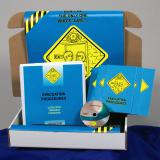
This new plug-and-play professional-quality audio presentation does the talking for you. Now it's easier than ever to deliver effective training on required OSHA training regulations and frequent accident causes. This training session is designed for plant managers, supervisors, and for other employees designated as emergency evacuation coordinators who need to understand the process for preparing a facility for the safe evacuation of employees. When the training is completed, workers will be able to set up and maintain exit routes, implement evacuation procedures, and recognize alarm signals. ![]() Learn to organize and carry out an emergency evacuation plan. Training for emergency response personnel: incident commanders, police officers, emergency management personnel, National Guard troops, hazmat teams, firefighters, security personnel, dispatchers, emergency operations center personnel, and others who might be involved in ordering or carrying out protective actions. Topics covered:
![]()
This new plug-and-play professional-quality audio presentation in Spanish/English does the talking for you. You get a complete, comprehensive training session with both visuals and audio, as well as training reinforcement materials—quiz, handout, and interactive exercises! This complete training course meets the needs of all types of learners (audio, visual, tactile) for results-oriented training. These courses can be used as self-directed courses or in a classroom setting for ultimate flexibility. At the end of this training, workers will be able to understand hazards that lead to an emergency, how to respond to an emergency, and how to protect themselves from fire and other hazards.
![]() This set of 3 DVDs on First Aid includes the following training modules:
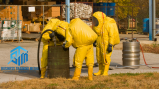
![]() Healthcare workers risk exposure to hazardous materials or terrorist agents when hospitals receive contaminated patients. This program, part of the Hospital First Receiver series, provides training in the initial care and treatment of contaminated victims. Topics covered include:
![]() There is no more terrifying hazard that confronts commercial seamen and commercial ships than fire at sea. To prevent this catastrophic emergency, every seaman is trained in Basic Fire Fighting. Each is expected to pay constant attention to fire prevention, and to be capable of serving as an effective member of a fire response team. These realities are reflected in the Standards of Training, Certification and Watchkeeping for Seafarers (STCW) that have been adopted by the International Maritime Organization (IMO) and its member nations. Competence in Basic Fire Fighting is one of four core elements of the Basic Safety Training that all ships are now required to provide, and all seamen are obligated to achieve. Using this Product Intended for use by commercial marine industry and seagoing recreational vessels, this training program is based on requirements set forth in Table VI of the STCW Code, as amended in 1995. Consisting of DVD training media, an audio-visual Test and a Workbook, the product offers training, testing and assessment features that facilitate compliance with the International Safety Management (ISM) and STCW codes. Content is organized into three segments. Part 1
Part 2
Part 3
Certification Crew members should be assigned to watch Basic Fire Fighting, Parts 1, 2 and 3 then view the audio-visual test while recording their answers to the test questions. Answer sheets and Certificates of Completion should be signed by each crewmember, his or her supervisor and by the captain, and maintained with crew records. Crewmembers are encouraged to keep copies of the Certificate of Completion with their personal records as well. Photocopy master versions of the answer sheet and Certificate of Completion can be found in the back of this Workbook. Remove these pages and create as many copies as you require. You also have the option of removing the answer sheet at the back of the Workbook before it is issued to crew personnel. VHS refers to videotape. NTSC is the U.S. media format and is used in countries including Canada, Mexico and Japan. PAL is the European media format used in more than 85 countries.
![]() Many employees bring their personal safety fears about terrorism to work with them. Help calm those security concerns and improve safety and productivity with this out of the box training meeting kit - PowerPoints and booklets. BLR's 16-page booklet Terrorism, Security, & Your Safety in the Workplace and PowerPoint kit gives you a meeting with all the work done for you. Explains psychological and emotional impact of all types of terrorism including chemical- and cyberterrorism, physical security and helps improve emergency preparedness. This kit includes:
![]() The first moments of every emergency situation are always the most critical. Use this computer-based training module to learn about the "DR. ABC" method and the importance of quickly calling 9-1-1. This course also explains how and when to perform artificial respiration and CPR, as well as how to use an automatic or semiautomatic external defibrillator (AED). 34 Minutes (21 min. video + 13 min. test)
![]() Entering permit-required confined spaces poses risks to your employees' safety, including toxic environments, engulfment hazards, dangerous moving parts, electrical hazards, pressure dangers, and more. Help make sure your employees understand these risks and learn important safety measures with Confined Spaces: Dangerous Places training program. This program helps you comply with OSHA's confined spaces training requirements. It provides an important training foundation for authorized entrants, attendants, entry supervisors, and rescue services and emergency personnel - anyone with the potential to encounter a permit space. The training video's unique "risk control" approach draws employees into a compelling risk scenario, a dramatic enactment that helps improve attention and retention. The Confined Spaces: Dangerous Places program is available in English and Spanish. Both versions include several ready-to-use training tools:
![]()
![]() Release - 2005
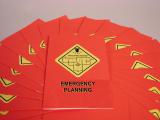
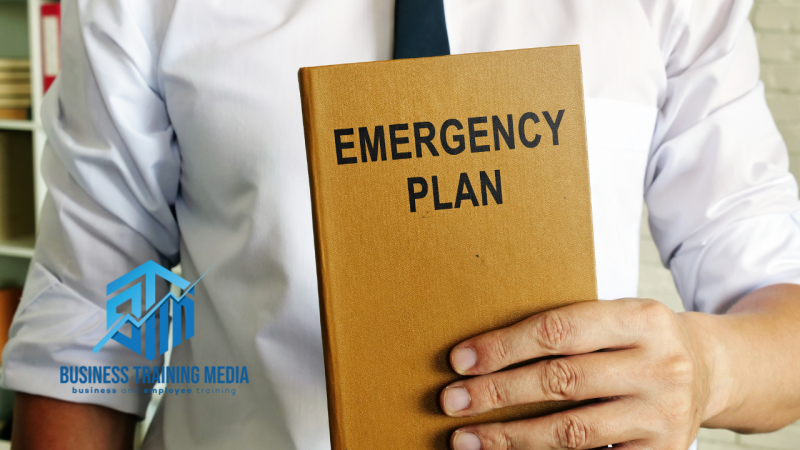
OSHA's 1910.38 requires that each company develop a workable Emergency Action Plan. With the new threats facing our society today, such a plan is required not only for compliance, but also for survival. Make sure your organization has a well thought out plan in place by following the guidelines provided in this program. Emergency Action Plan: Crisis Under Control provides information on the following emergency action plan guidelines:
Includes 10 employee handouts> This DVD features the training content of the Emergency Action Plan: Crisis Under Control video. It covers developing an effective emergency action plan, emergency alarms and evacuation, emergency supplies, medical services, employee training, and cooperation with law enforcement and fire personnel. Added features and benefits of DVD training include:
![]() Don't let smoke, fumes, or toxic gases keep you from getting to safety in an emergency. Use this training to prepare yourself and your team with a working knowledge of escape respirators. This computer-based training module describes the different types of escape respirators and self-contained self-rescuers (SCSRs), as well as inspecting, caring for, donning, and using them. Additional topics discussed include atmospheres immediately dangerous to life and health (IDHL) and transferring to a new SCSR when necessary. View Sample
Hospital Incident Command System - DVD
Hospitals and other healthcare facilities need an emergency management plan for any type of event that adversely affects the facility. This film provides up-to-date training about the Hospital Incident Command System (HICS), a nationally-recognized system for hospitals that integrates with management systems used by other emergency organizations. Topics covered:
|